Problem Gambling
Problem gambling is a serious behavioral issue, and the National Council on Gambling estimates 2.5 million U.S. adults meet the criteria for severe gambling problems each year. As of December 2025, there is currently no federal funding dedicated to preventing or treating gambling addiction. Rapid expansion of online sports betting has increased exposure, especially among adolescents and young adults.
Gambling is defined as risking something of value, usually money, on the outcome of an event decided at least partially by chance.
As gambling opportunities expand, particularly through online and sports betting, communities must understand the signs, risks, and impact of gambling disorder, as well as the importance of early screening and support.
Where Gambling Takes Place
Gambling happens in a variety of settings across the United States, but gambling is also woven into everyday environments like gas stations, convenience stores, sporting events, and workplaces. Because it is so easily accessible online, it can happen virtually anywhere with an internet connection.
Commercial gambling includes lotteries, instant lotteries, number games like bingo and Keno, sports betting, horse betting, poker and other card games, casino table games like roulette and craps, and electronic gaming machines. All these forms of gambling are available both in physical venues and via the Internet.
To help understand these environments, the Centers for Disease Control and Prevention’s State Tobacco Activities Tracking and Evaluation (STATE) System tracks three primary types of gaming facilities: casinos, racinos (or racetrack casinos), and bingo halls. While these categories cover much of the commercial gaming landscape, they don’t include gambling on Native American reservation lands or facilities that offer only slot machines or card rooms, even if they market themselves as casinos. It also does not monitor settlings like sports betting or off-track betting sites.
What is Problem Gambling
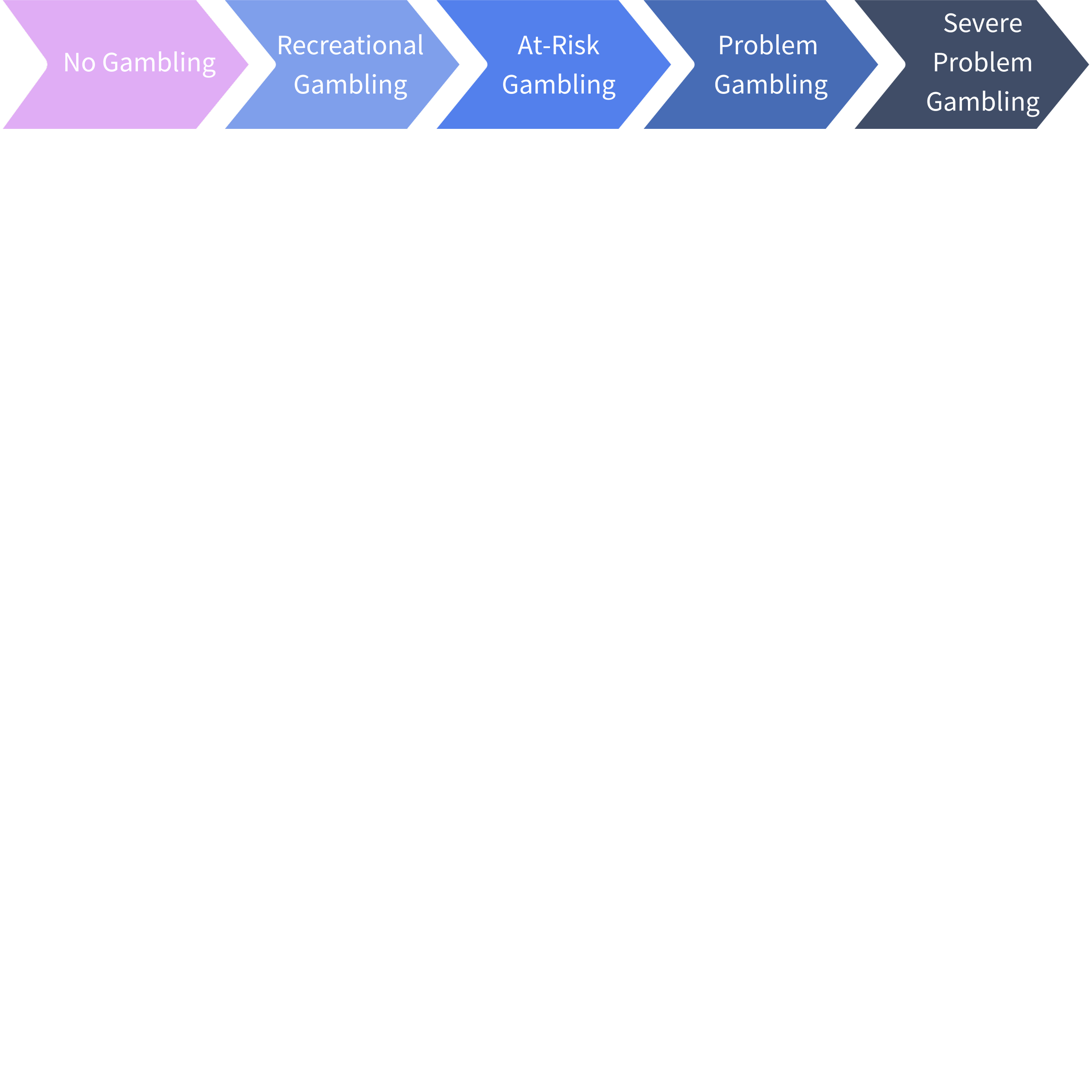
Gambling behavior exists on a continuum. For some, it’s an occasional form of entertainment. For others, it becomes an activity that leads to financial strain, emotional distress, or relationship problems. The continuum of gambling behavior includes:
No gambling: No engagement or participation in any form of gambling.
Recreational gambling: Gambling that occurs for fun and/or recreation. Generally, this gambling does not result in a negative impact on the person’s life.
At-risk gambling: Gambling that can include a range of behaviors that may pose a risk of physical or emotional harm.
Problem gambling: Gambling that results in a negative impact on the person’s life or on the lives of the person’s family, friends, and/or co-workers. It can be an occasional impact or an ongoing and serious situation.
Severe problem gambling: Problem gambling that is diagnosed by a mental health professional using criteria from the American Psychiatric Association’s Diagnostic and Statistical Manual of Mental Disorders (DSM-5)
Those who experience more severe and persistent impacts may meet the criteria for gambling disorder. The DSM-5 classifies gambling disorder under Substance-Related and Addictive Disorders and defines it as, “persistent and recurrent problematic gambling behavior leading to clinically significant impairment or distress.”
A diagnosis requires four or more of the following behaviors within a 12-month period:
Is often preoccupied with gambling (e.g., having persistent thoughts of reliving past gambling experiences, handicapping or planning the next venture, thinking of ways to get money with which to gamble)
Needs to gamble with increasing amounts of money in order to achieve the desired excitement
Has repeated unsuccessful efforts to control, cut back, or stop gambling
Is restless or irritable when attempting to cut down or stop gambling
Gambles as a way of escaping from problems or of relieving a dysphoric mood (e.g., feelings of helplessness, guilt, anxiety, depression)
After losing money gambling, often returns another day to get even (“chasing” one’s losses)
Lies to family members, therapist, or others to conceal the extent of involvement with gambling
Has committed illegal acts such as forgery, fraud, theft, or embezzlement to finance gambling
Has jeopardized or lost a significant relationship, job, or educational or career opportunity because of gambling
Relies on others to provide money to relieve a desperate financial situation caused by gambling
Why It Matters
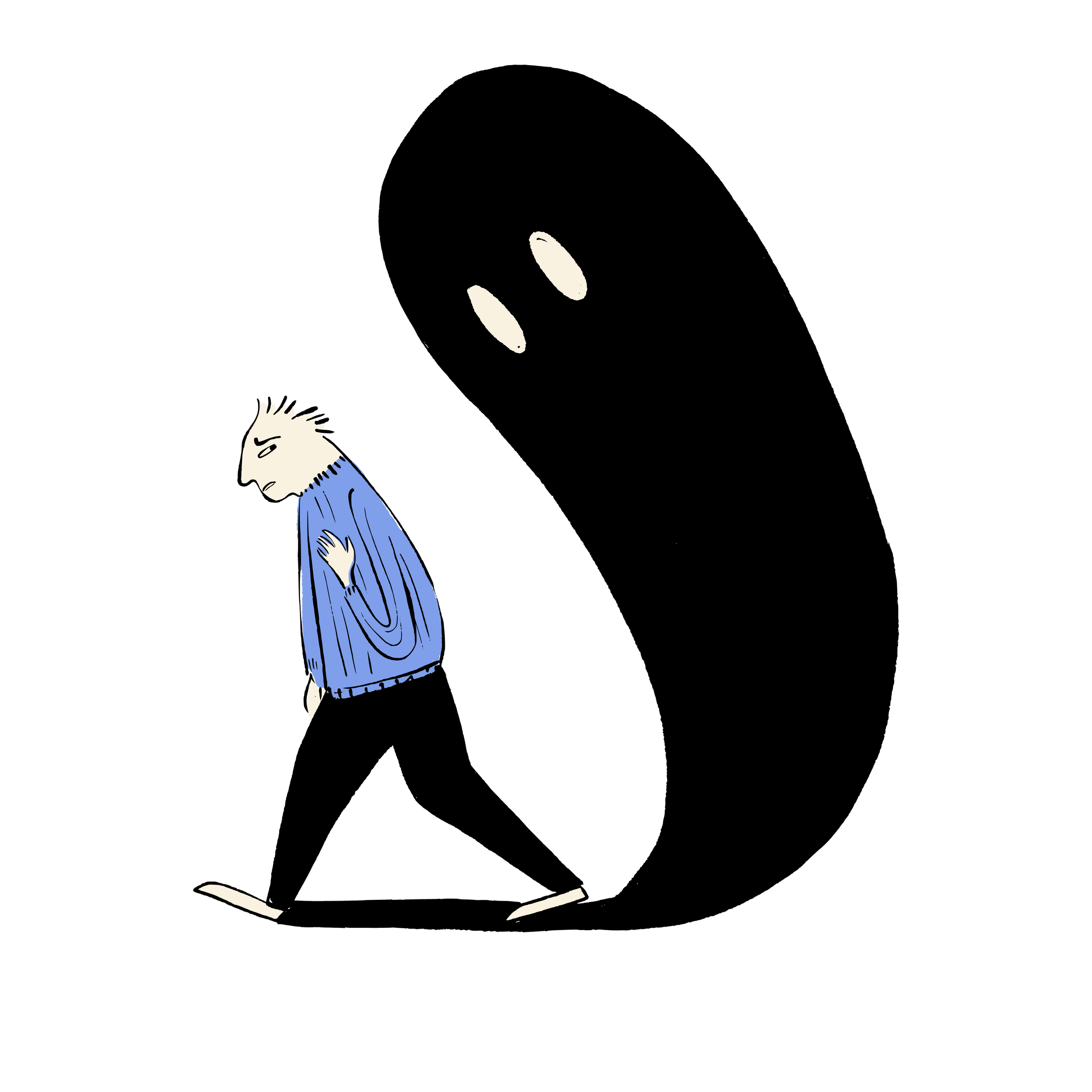
Problem gambling is sometimes called “the hidden addiction” because there are no visible physical symptoms. Yet the impact is widespread. Individuals experiencing problem gambling can struggle with financial stress, mental health challenges, job instability, or legal issues. Families may face broken trust, emotional turmoil, or sudden financial crises.
Problem gambling rarely occurs in isolation. As many as 96% of people with problem gambling also meet the criteria for another mental health disorder, and 57% of those with problem gambling habits also had substance misuse behaviors (Lorains, et. al., 2011, Grant, J.E., & Chamberlain, S.R., 2020).
At the community level, the burden is significant. The National Council on Problem Gambling estimates that the United States faced over $7 billion annually in costs tied to problem gambling, such as job loss, healthcare, criminal justice involvement, and other social impacts.